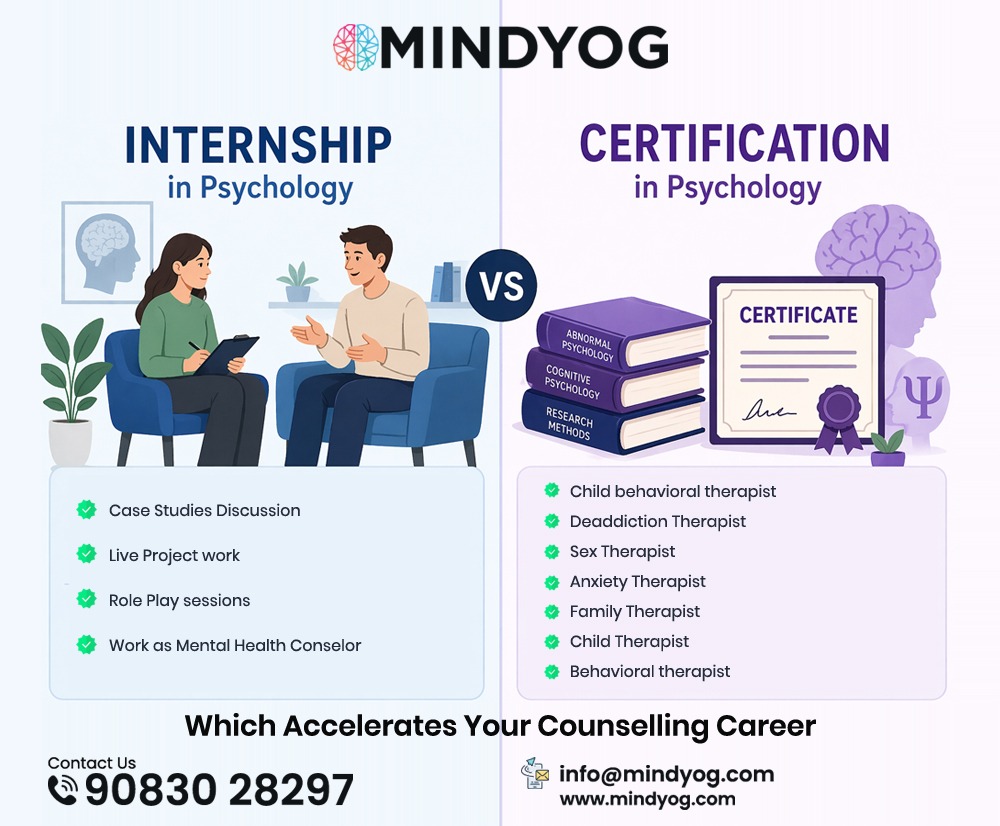
If you’re staring at a psychology degree and wondering whether to chase a certification or jump straight into an internship, you’re not alone. Employers, licensing boards, and clients all ask the same question: “Do you have real‑world experience or just theoretical knowledge?”
Below you’ll find a step‑by‑step, data‑driven guide that tells you exactly when to prioritize an internship, when a certification adds value, and how to combine the two for maximum impact.
Quick At‑A‑Glance Comparison
| Feature | Certification | Internship |
| Demonstrates knowledge | ✅ Strong – shows you’ve mastered a model (CBT, DBT, trauma‑informed care) | ⚠️ Moderate – you’ll learn on the job |
| Demonstrates skill | ❌ Weak – no client contact | ✅ Very strong – real‑time practice |
| Counts toward licensing hours | ❌ No (except rare “clinical‑training” credits) | ✅ Yes – required by APA, state boards, and most graduate programs |
| Builds professional network | ❌ Rarely (you meet other certificate‑holders) | ✅ Yes – supervisors, peers, referral sources |
| Earns income | ❌ Usually free | ✅ Sometimes (paid placements, remote tele‑health roles) |
| Ideal stage | Early‑career knowledge or niche specialisation | Early‑mid career experience and supervised hours |
| Typical duration | 1 – 12 weeks (self‑paced) | 3 – 12 months (part‑time or full‑time) |
1. What a Counselling‑Psychology Certification Actually Gives You
1.1 Core Benefits
- Theoretical depth – You master a specific therapeutic framework (e.g., CBT, ACT, EMDR).
- Resume signal – Shows commitment to continued learning before you have a full client caseload.
- Specialisation shortcut – Many graduate programs and private practices require at least one accredited certificate in their hiring criteria.
1.2 Popular, accredited certifications
2. Why a Psychology Internship Changes Everything
2.1 The licensing‑hour engine
Most require 100 – 150 supervised client hours before you can sit for the licensure exam. A structured internship is the only pathway that fulfills that requirement.
2.2 Real‑world skill acquisition
| Skill | Learned in a certification? | Learned in an internship? |
| Conducting intake assessments | ❌ | ✅ |
| Managing crisis situations (e.g., suicidal ideation) | ❌ | ✅ |
| Writing SOAP notes & treatment plans | ❌ | ✅ |
| Knowing when to refer to higher‑level care | ❌ | ✅ |
| Maintaining professional boundaries live | ❌ | ✅ |
2.3 Paid vs. unpaid vs. remote options
| Option | Advantages | Drawbacks |
| Paid (in‑person or remote) | Income, signals that the org values your work, often includes formal supervision | Fewer slots, may be competitive |
| Unpaid (volunteer) | Easier to secure, good for building experience quickly | No salary, may feel “free labor” |
| Remote/tele‑health | Flexible schedule, national job market, can be done from anywhere with stable internet | Requires reliable tech, possible time‑zone coordination |
2.3.1 How to Find a Paid Internship on Psychology Online
- Target accredited tele‑health providers – BetterHelp, Talkspace, Mindoula, and regional community‑health NGOs.
- Search dedicated portals – PsychologyJobs.com, Idealist.org, Internships.com, and the APA Career Center.
- Leverage university career services – Ask for remote placement referrals; many schools have new‑partner agreements with online clinics.
- Prepare a supervision contract – Must list supervisor credentials, hour‑tracking method, confidentiality clauses, and payment terms.
| Step | Action | Checklist Item |
| 1️⃣ Self‑Assessment | Define the client group you want to serve (adolescents, substance‑use, trauma). | List 3 preferred populations. |
| 2️⃣ Clinical CV | Highlight coursework, research, volunteer work, and any relevant life‑experience. | Use the APA Clinical CV template (downloadable). |
| 3️⃣ Targeted Cover Letter | Emphasise your need for supervised hours and how your background aligns with the agency’s mission. | Include a concrete example of a skill you’re eager to develop. |
| 4️⃣ Apply Broadly | Submit to 10–12 placements (mix paid, unpaid, remote). | Track each application in a spreadsheet (date, status, contact). |
| 5️⃣ Interview Prep | Role‑play intake and crisis scenarios; be ready to discuss ethical dilemmas. | Practice with a mentor or peer. |
| 6️⃣ Secure Supervision | Confirm weekly (or bi‑weekly) supervision, written feedback, and hour‑verification method. | Obtain a signed supervision agreement. |
| 7️⃣ Log & Reflect | Use the APA Supervision Log to record date, client age, presenting problem, interventions, and supervisor comments. | Review monthly with your supervisor for growth. |
3. When to Add a Certification
| Situation | Recommended Certification |
| After ≥ 120 supervised hours | Choose a specialization that complements your experience (e.g., CBT after a general counseling placement). |
| Applying to a graduate program that lists a required model | Earn the specific credential (e.g., DBT for dialectical‑behavior‑therapy programs). |
| Seeking a niche private‑practice clientele | Add trauma‑informed, mindfulness, or EMDR certificate to market distinct services. |
| Transitioning from another health field | A broad “Counselling Psychology Foundations” certificate can bridge the gap quickly. |
4. Real‑World Success Stories
Sofia M. – Completed a 6‑month paid remote internship with XYZ Telehealth (40 supervised hours). After graduation she secured a full‑time therapist position at a community clinic and earned her CBT‑T certification three months later.
David L.– Finished a 12‑month in‑person internship at a state mental‑health hospital. While interning he obtained an EMDR certification, which landed him a trauma‑specialist role at a private practice immediately after licensure.
These stories illustrate the synergy: internships provide the “hands‑on proof,” certifications add the “expert label” that clients and employers trust.
5. Frequently Asked Questions – FAQ Schema Ready
Q1. Do psychology internships count toward licensure?
A: Yes. Almost every state board (including California, New York, Texas, and Florida) requires a minimum of 100‑150 supervised clinical hours – all of which can be earned through an accredited internship.
Q2. Can I do an internship while finishing my MSc/PhD?
A: Absolutely. Many programs allow part‑time placements (10‑15 hrs/week). Just confirm with your academic advisor that the hours meet both your degree and licensing requirements.
Q3. Are online internships “real” or just shadowing?
A: When the placement includes live client sessions, documented supervision, and hour‑tracking, a remote internship is equivalent to an in‑person one for licensing and hiring purposes.
Q4. How much does a paid psychology internship usually pay?
A: Paid rates vary: $15‑$30 / hour for entry‑level tele‑health roles, or a stipend of $1,000‑$3,000 for a 3‑month placement. Some NGOs offer service‑learning credits instead of cash.
Q5. Which certification should I get first?
A: Start with a broad, evidence‑based credential (CBT or DBT) that aligns with the client population of your upcoming internship. This shows you can talk the talk and walk the walk.
Q6. Do certifications cost money?
A: Look for scholarships, employer tuition assistance, or discounted student rates from professional bodies (APA, BACP, AAPA).
Q7. How many supervised hours do employers typically ask for?
A: Private practices often require 80‑120 hours; hospitals and NGOs may request 150 hours plus a recommendation letter.
6. Your Free “Paid Remote Psychology Internship Checklist”
Ready to take action? Click below to download a print‑ready PDF that includes:
- 7‑step application timeline
- Email templates (intro, follow‑up, thank‑you)
- Sample supervision contract clause sheet
- Hour‑logging spreadsheet (compatible with APA standards)
- List of vetted paid‑remote internship providers (2024 edition)
| Career Stage | What to Do First | What to Add Next |
| Student / Fresh Graduate | Secure a supervised internship (paid if possible). Build 80‑120 hours. | After you have ≥ 50 hours, enroll in a targeted certification that complements the placement. |
| Mid‑career Switcher | Find a short‑term paid remote internship (3‑6 months) in the new specialty. | Pair it with a certification that validates the switch (e.g., trauma‑informed care). |
| Established Clinician Seeking Specialisation | If you already have > 200 hours, a certification now adds marketable depth. | Optional: a micro‑internship (e.g., one‑month research‑clinic rotation) to stay current. |
7. Bottom Line – How to Prioritise Right Now
Rule of thumb: Every hiring manager in counseling psychology asks first, “Do you have supervised client hours?” If the answer is yes, the next question becomes, “What therapeutic model are you trained in?” Answer both, and you’re a top candidate.
Your career won’t wait. The combination of real‑world supervised experience + credible certification is the fastest, most trusted route to becoming a licensed, in‑demand counselling psychologist.